Is Someone Recording Your Calls? Signs and How to Tell

That faint click on a call can spark a real worry: is someone recording this? Phone call recording is easier than ever, but detecting it — and knowing your rights — is something most people get wrong.
This guide explains, for defensive purposes, whether someone can record your calls secretly, the warning signs, the laws that govern it, and how to protect your conversations. It’s written to inform and keep your calls private.
Recording calls without the required consent is illegal in many states under wiretap and two-party consent laws. This guide is for understanding and protecting your own privacy.
Can Someone Record Your Phone Calls Without You Knowing?
Honestly, yes — call recording can happen silently, and it’s often undetectable from your end. But the realistic methods are limited, and your defense is more legal than technical.
So the most likely “recorder” is the other party, not a remote hacker. The next sections cover the faint signs, the law, and how to protect sensitive conversations.
“People look for clicks and beeps, but digital calls don’t work that way — recording is silent. The realistic threat is the person on the other end, or spyware on your own phone. Your best defense is the law and good device hygiene.”
Alex Rivera, CEH, OSCP
What Are the Signs Someone Is Recording Your Call?
Detecting call recording is difficult, but a few signs can hint at it — especially if the recording involves spyware on your own device rather than the other party.
No single sign proves call recording, and call noises are the least reliable. A cluster of device symptoms — drain, heat, data spikes, unknown apps — points more to spyware than to the other party.
Is It Legal to Record a Phone Call?
Here’s where you have real leverage. Call-recording laws vary, and understanding them tells you when recording is restricted and what recourse you have.
| Rule | What It Means | Where |
|---|---|---|
| One-party consent | Only one person (you) must agree | Many US states & federal |
| Two-party / all-party consent | Everyone must agree to record | California, Florida, and others |
| Cross-state calls | Stricter state’s rule often applies | Interstate calls |
| Secret third-party recording | Generally illegal wiretapping | Federal & state law |
Roughly a dozen US states require all-party consent to record a call. In those states, call recording without your agreement is a crime — the federal Wiretap Act and state recording laws back this up.
How Do Call Recording Methods Actually Work?
Understanding how calls actually get recorded shows you what’s realistic to worry about — and what’s myth.
Apps claiming to record any phone’s calls from just a number are scams — they install malware on your device instead. Real call capture needs the other party’s action or spyware on the target phone.
How Do You Stop Someone From Recording Your Calls?
You can’t control the other party’s device, but you can protect your own line and use the law. A few steps cover the realistic risks.
“You can’t stop the person you’re calling from hitting record — but you can keep spyware off your own phone, know your consent laws, and take sensitive talks to encrypted channels. That covers every realistic recording threat.”
Dr. Sarah Chen, Mobile Security Researcher
Set these habits once and you’ve addressed the recording you can actually control. For conversations that truly must stay private, encrypted apps and in-person talks are the surest route.
How Do You Detect Recording Apps on Your Phone?
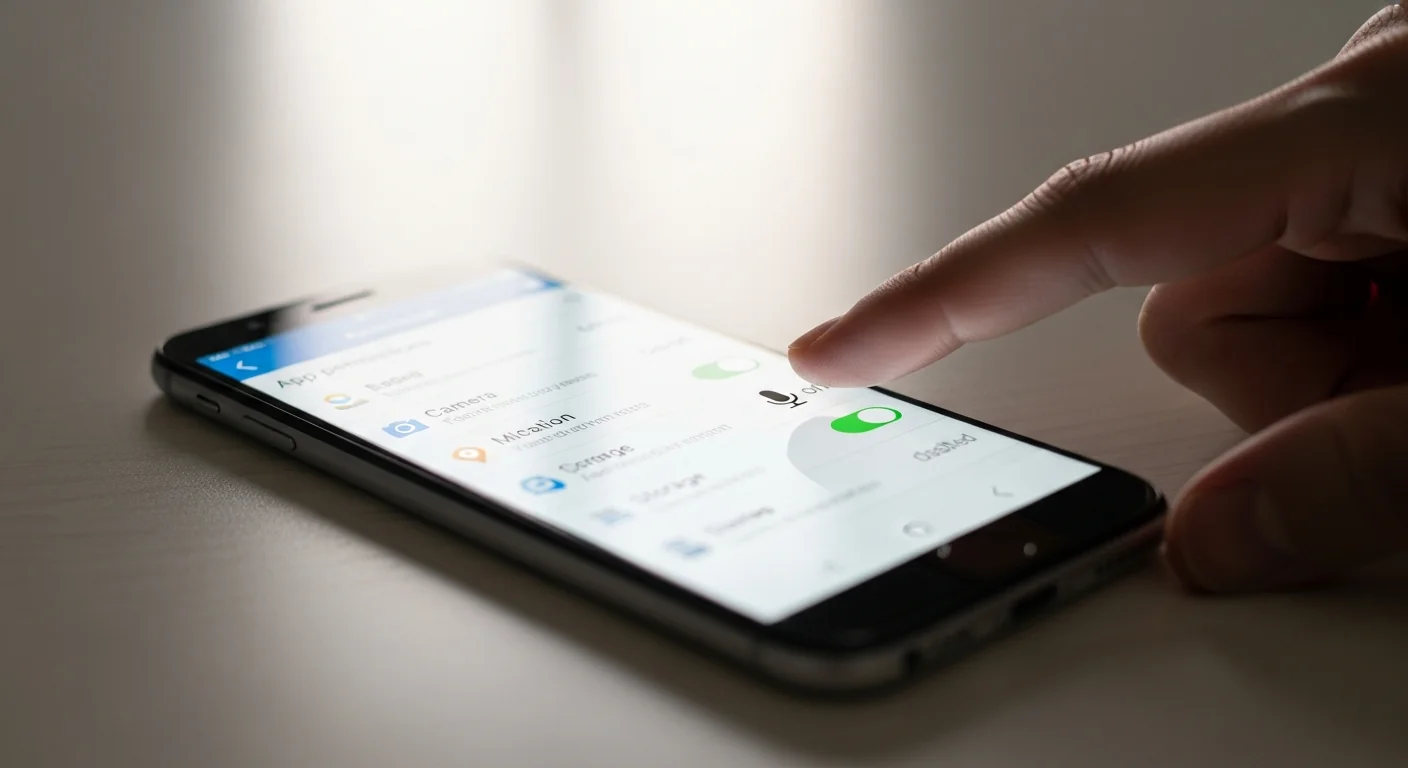
If you suspect call-recording spyware on your own device, a quick audit usually reveals it. The recording has to come from an app with microphone access.
For a full walkthrough, see our guide on detecting hidden spy apps. Most call-recording spyware is caught by a careful permissions audit.
Final Thoughts
Someone can record your calls silently, and detecting it is genuinely hard — the old clicks and beeps are myth. The realistic recorders are the other party or spyware on your own phone, not a remote tap on your number.
Know your state’s consent law, keep your device free of spyware, and move sensitive talks to encrypted channels. Those steps cover every recording threat you can actually do something about.
Frequently Asked Questions
Yes, and it's often undetectable. The most common case is the person you're talking to recording with an app or a second device — silent and nearly impossible to detect from your end. Recording that originates on your own phone requires monitoring spyware, which had to be installed with physical access. There's no app that records any phone's calls from its number alone; those are scams. Your realistic defenses are keeping spyware off your device and knowing your state's consent law.
Rarely. On modern digital cellular and VoIP networks, recording is silent — the clicks, echoes, and static people associate with tapped lines are a holdover from old analog systems and usually just mean a poor connection. They're a weak hint at most, never proof. Far more reliable signs of recording spyware on your own phone are sudden battery drain, the device running hot while idle, unexplained data usage, and unfamiliar apps with microphone access.
It depends on your state. Federal law and many states use one-party consent, meaning only one participant (you) must agree — so you can record your own calls. But around a dozen states, including California and Florida, require all-party consent, where everyone must agree. For interstate calls, the stricter state's rule often applies. Secret recording by an uninvolved third party is generally illegal wiretapping everywhere. If you're in an all-party-consent state, someone recording you without consent is breaking the law.
Audit your app permissions — check which apps have microphone access and revoke anything unfamiliar. On iPhone, also review Settings → General → VPN & Device Management for unknown configuration profiles. Watch for the device symptoms of background spyware: sudden battery drain, heat while idle, unexplained data spikes, and apps you don't remember installing. If you confirm something, update your OS and, if needed, back up your data and reset the phone, setting it up as new rather than restoring a possibly infected backup.
Combine device hygiene with the right channels. Keep spyware off your phone by using official app stores, auditing microphone permissions, and updating your OS. Know your state's consent law so you understand when recording is restricted. For truly sensitive conversations, use an end-to-end encrypted calling app or talk in person, where covert recording is harder and unauthorized interception is far less likely. If you suspect a specific person is recording, you can also simply ask — in all-party-consent states, they're legally required to disclose it.