Hackathon

This guide covers everything you need to know about this topic with practical steps and expert advice.
This guide is for educational purposes. Hackathons are legal, collaborative events — but always respect intellectual property rights and event rules when participating.
Imagine spending a weekend turning a wild idea into a working prototype alongside strangers who become teammates.
That is exactly what is a hackathon — a high-energy sprint where creativity meets code under a ticking clock.
These events have launched billion-dollar products and transformed careers. Whether you code, design, or pitch, a hackathon opens doors you never knew existed.
What Is a Hackathon and How Does It Work?
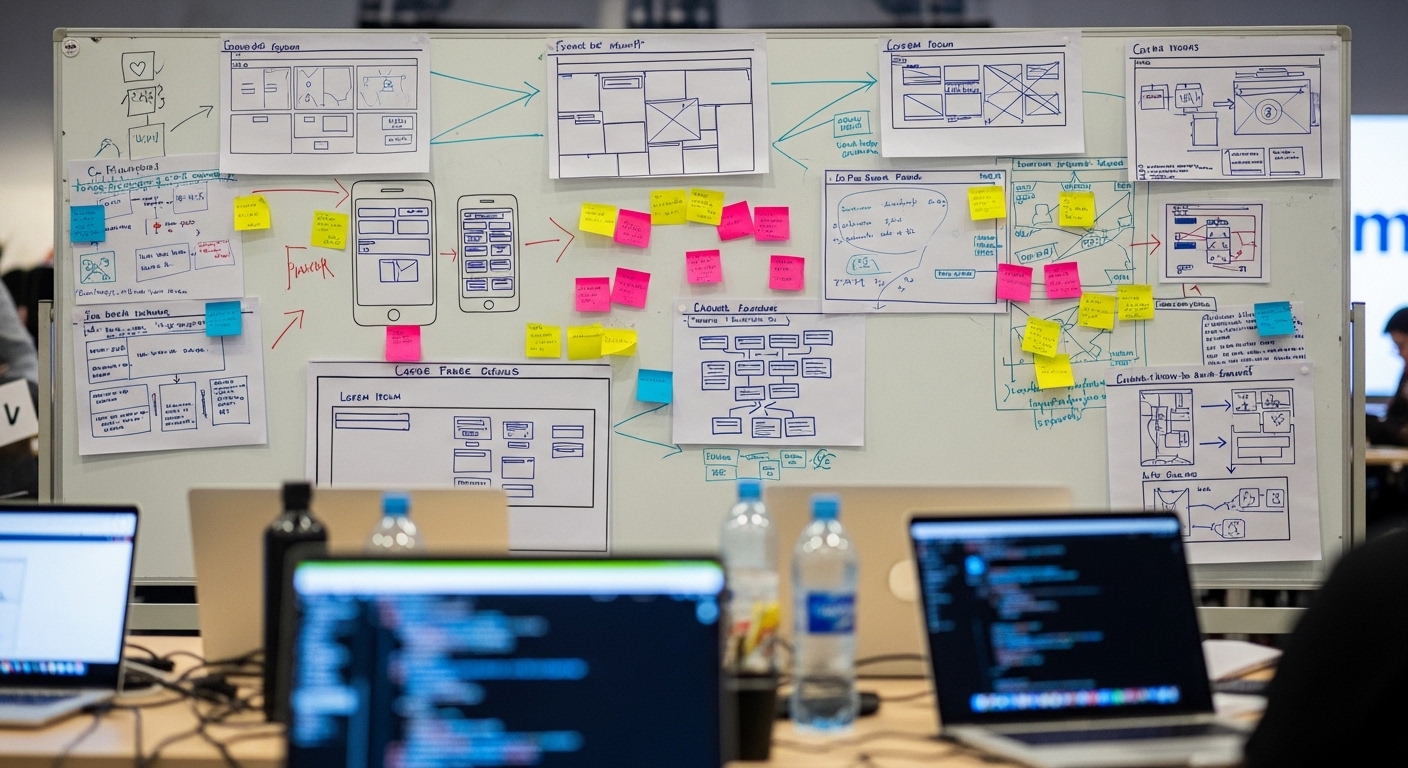
So what is a hackathon in practice? It is an intense gathering where coders, designers, and thinkers team up to build functional prototypes under tight deadlines.
The term blends “hack” for clever problem-solving with “marathon” to capture the endurance needed. This format drives rapid innovation through nonstop collaboration.
According to Major League Hacking, over 200,000 students participate in hackathons annually across 65+ countries.
Events typically last 24 to 48 hours and often span a full weekend. Teams form either ahead of time online or right on site through quick introductions.
At the close, every team pitches its work to judges in concise demos. Presentations highlight working features and key innovations. Winners earn recognition while all participants walk away with fresh insights.
“The most effective security measures are often the simplest: strong unique passwords, two-factor authentication, and keeping your software updated. Most breaches exploit basic oversights, not sophisticated vulnerabilities.”
Alex Rivera, CEH, OSCP
What Types of Hackathons Exist?
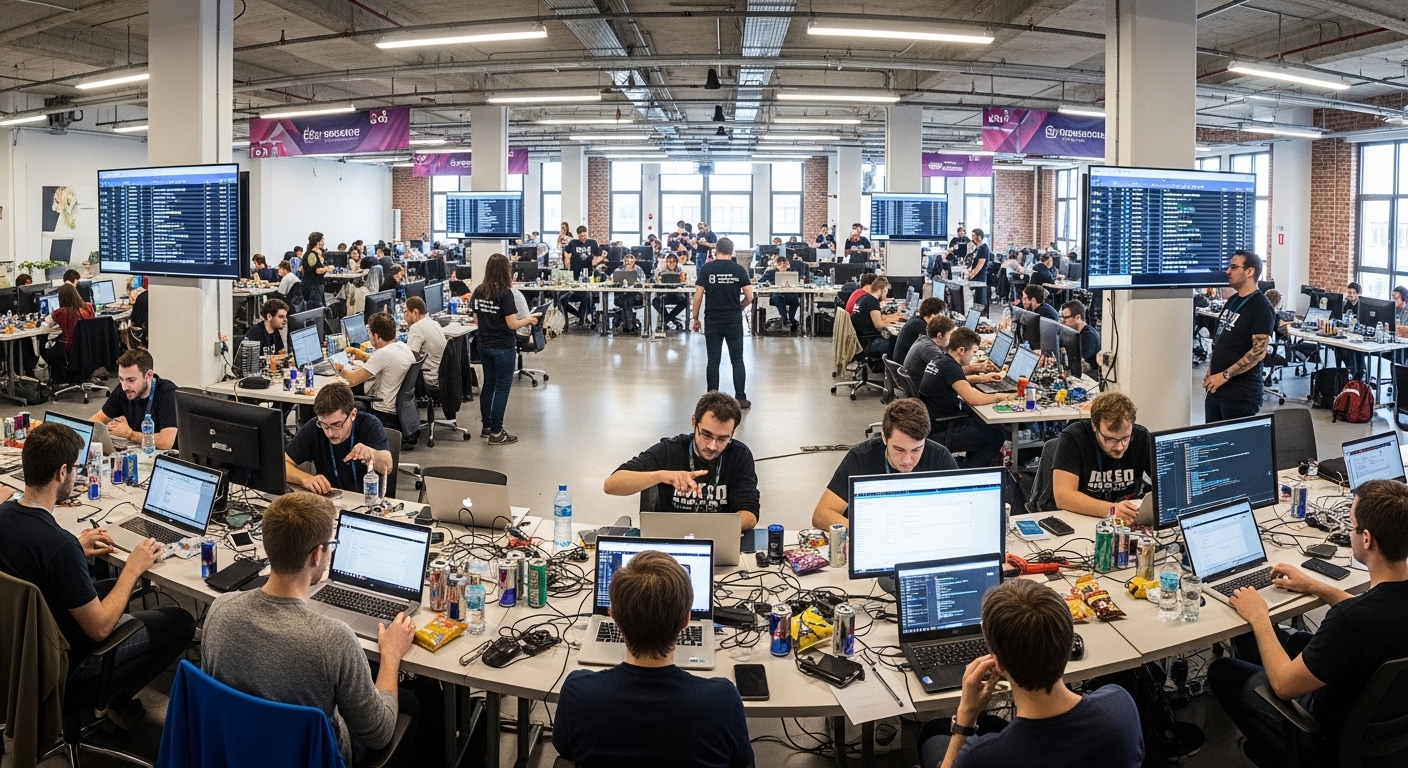
Once you grasp what is a hackathon, the next question is which type fits you best. The format shifts based on who hosts the event and what problems participants tackle.
Corporate and Open Hackathons
 Corporate Hackathons. Companies such as Facebook, Google, and Atlassian run internal hackathons to unlock fresh ideas. Employees experiment freely with emerging tools. Results often ship as features used by millions.
 Open Hackathons. Anyone can join public hackathons regardless of background. Platforms like Devpost list hundreds of events with clear steps. Prizes include cash, hardware, or sponsored trips.
Social Impact and Industry-Specific Hackathons
Social impact hackathons target real-world community challenges with nonprofit or government backing. Teams build tools for accessible education, climate monitoring, or disaster response.
Look for “social good” or “civic hack” tags on event listings to find purpose-driven hackathons near you.
Industry-specific hackathons zero in on sectors such as FinTech, HealthTech, or Cybersecurity.
Experts from each field guide the challenges and evaluate solutions. You gain both technical depth and domain knowledge fast.
Why Should You Participate in a Hackathon?

Hackathons offer one of the fastest ways to level up your technical skills and career.
In just 24 to 48 hours, you learn new frameworks, APIs, and tools while building something real under pressure.
The intense environment forces rapid growth that months of solo learning rarely match. This hands-on experience sticks with you far longer than any tutorial.
A HackerRank survey found that 33% of hiring managers consider hackathon projects as strong proof of practical coding ability.
Beyond technical gains, hackathons are powerful networking platforms. You meet industry professionals, potential co-founders, and recruiters in a relaxed yet focused setting.
Companies like Google, Microsoft, and Meta actively scout talent at these events. Participation can turn into direct job opportunities overnight.
Bring business cards or prepare a short LinkedIn pitch — many job offers start with a hallway conversation at a hackathon.
Participating also boosts your portfolio with a tangible project you can showcase. Some hackathons offer significant prizes including cash awards, hardware, and cloud credits.
On a personal level, you develop crucial skills like pitching ideas and effective teamwork. Problem-solving under pressure becomes second nature after even one event.
- Accelerate skill development with real-world pressure
- Build meaningful industry connections
- Create portfolio pieces that stand out
- Access cash prizes and valuable rewards
- Discover unexpected job opportunities
- Improve pitching and collaboration abilities
- Enjoy the vibrant community atmosphere
How Do You Prepare for Your First Hackathon?

Preparation separates a stressful first hackathon from a rewarding one. Start by choosing a beginner-friendly event and review past projects to gauge difficulty.
This helps set realistic expectations before you even show up. Checking the theme and sponsors early lets you brainstorm solid backup ideas.
- Reliable laptop with charger
- Portable power strip
- Noise-canceling headphones
- Backup cables and adapters
- Notebook and pens for sketches
- Snacks and water bottle
- Change of clothes for overnights
- Any hardware for your idea
Before the hackathon, brush up on Git basics and set up your development environment. Select two to three technologies you already know well to avoid debugging unfamiliar tools.
Form a team early by joining the event’s Slack or Discord channels. Seek people with complementary skills so your group covers code, design, and pitching.
Avoid building your idea on an API or tool you have never used before — test it at least once the week prior or risk wasting hours on setup bugs.
Mentally prepare by getting good sleep the night before. Your first hackathon is about learning, not necessarily winning.
Focus on the process rather than perfection. Avoid overly ambitious projects and never skip preparing your final pitch — both are common beginner mistakes.
- Select beginner-friendly events
- Pack essential gear and supplies
- Prepare your tools and tech stack
- Build a balanced team early
- Research themes and brainstorm ideas
- Prioritize rest and realistic goals
- Avoid over-ambitious scopes
What About What Happens During a Hackathon: Step by Step?

Understanding what is a hackathon means knowing the flow from opening to final pitch. Each phase builds momentum toward that demo moment.
The opening ceremony sets the tone and clarifies expectations. Organizers outline the schedule, judging criteria, and any themes. Past winners often share tips that get everyone focused.
Team Formation and Main Hacking Phase
 Team formation follows immediately after opening. You pitch ideas in short bursts or mingle to join existing groups. Balanced teams with coders, designers, and presenters perform best.
 The main hacking phase consumes most of the time. You code, iterate, and troubleshoot nonstop while grabbing quick naps. Mentors roam the floor ready to unblock you when needed.
Mentorship sessions provide targeted guidance throughout. Sponsors and experienced developers drop in to review progress. Their input often turns good prototypes into prize-worthy entries.
Visit every mentor at least once — even outside your domain. A business mentor might spot a market angle your technical team missed entirely.
Pitching and judging wrap up the event. Each team delivers a timed demo with slides. Judges score on originality, technical quality, and overall impact before announcing prizes on stage.
What About Famous Hackathon Success Stories?

Many successful products began as hackathon projects. The Facebook Like button was invented during an internal hackathon and is now used billions of times every day.
This simple feature demonstrates how small ideas can scale massively. Focused development time during a single weekend turned a thumbs-up sketch into an iconic interaction.
GroupMe was built at a TechCrunch Disrupt hackathon and later acquired by Skype (Microsoft) for $85 million — proving a weekend project can become a major exit.
EasyTaxi started at a Startup Weekend event and grew into the largest taxi booking app across Latin America. Carousell originated at a Singapore hackathon and has since become a billion-dollar marketplace.
Other notable examples include Zapier, whose automation platform traces its roots to a Startup Weekend. PhonePe, India’s leading payments app, also began as a hackathon project.
These stories show that hackathons compress months of idea validation into a single intense weekend. A well-executed project can launch careers and companies alike.
- Facebook Like button — internal hackathon idea
- GroupMe — acquired for $85M after TechCrunch Disrupt
- EasyTaxi — grew from Startup Weekend
- Carousell — Singapore hackathon to $1B+ company
- Zapier — originated at Startup Weekend
- PhonePe — started as hackathon project
What Are the Best Platforms to Find Hackathons?

Finding the right hackathon is half the battle. Anyone asking what is a hackathon should also know where to discover upcoming events.
Devpost serves as the go-to hub for discovering and joining hackathons worldwide. The site hosts event pages with full details on prizes, themes, and submission forms.
Major League Hacking focuses on student and community-driven events with strong support. Their calendar features inclusive, high-energy gatherings year-round with extensive mentorship.
| Platform | Description | Best For | Key Feature |
|---|---|---|---|
| Devpost | Central listing and submission platform | All experience levels | Easy project upload and virtual judging |
| Major League Hacking | University and community hackathons | Students and beginners | Mentorship and sponsorship network |
| HackerEarth | Coding competitions and themed challenges | Developers wanting depth | Robust problem statements and leaderboards |
| Eventbrite | General event marketplace with filters | Local in-person events | Simple ticketing and venue details |
| AngelHack | Global series for startup creation | Aspiring founders | Investor pitching opportunities |
Other solid choices include HackerEarth for competitive challenges and AngelHack for startup-minded events. Searching “what is a hackathon near me” on any of these platforms returns curated results fast.
“Digital security is a shared responsibility. Parents monitoring their children, employers securing company devices, and individuals protecting their own accounts all contribute to a safer ecosystem.”
Dr. Sarah Chen, Digital Forensics Expert, SANS Institute
Final Thoughts
At its core, what is a hackathon is a crash course in building, pitching, and collaborating under pressure. You leave with tangible work to showcase and stories that impress future employers or investors.
Now that you understand what is a hackathon, start small and pick one that excites you.
The next big idea could begin with your next weekend sprint — register on Devpost or Major League Hacking today.
Frequently Asked Questions
Totally worth it. What is a hackathon if not a team sport? Most events need people who can design screens, test the product, or handle the pitch deck. You do not need to code to contribute real value. Show up curious and you will learn more in one weekend than a month of tutorials.
You can absolutely show up solo — most people do. Organizers run team-formation sessions right after the kickoff where you pitch ideas or join someone else's. Online events use Discord channels or matching bots. Just introduce yourself and mention what skills you bring.
It depends on the event. Some give a strict theme or sponsor challenge while others let you build anything. Check the rules page before you go. Either way, keep scope tiny — a polished simple demo always beats a half-finished ambitious one when judges are scoring.
Plenty of hackathons welcome professionals, career changers, and hobbyists. MLH leans student-heavy, but Devpost and AngelHack host events open to everyone. Corporate hackathons are specifically for employees. Just filter by audience type on the platform and you will find the right fit.
Not really a single Zoom call. You get a Discord or Slack workspace with channels for your team, mentors, and announcements. Submissions go through a shared link, and judging is often a live stream. The vibe is more relaxed than in-person but the deadlines hit just as hard.